


Written by the AutoMagToday Content Team | Reviewed by Anand Raj, Automotive Review Expert, AutoMagToday | Last updated: November 2026
Quick Answer
Wondering who gives the most cash for junk cars? Local salvage yards and scrapyards often pay the most for older, heavy or complete cars because they price by weight and usable parts. National buyers like Peddle, Copart and CarMax may offer more for newer cars with resale or auction value. Get at least three quotes, compare the final cash amount after towing, and sell only to a buyer who handles the title paperwork properly.
So, who gives the most cash for junk cars? The answer depends on your vehicle’s condition, age, weight and location. A local salvage yard may offer the best price for an older vehicle, while a national online buyer or dealership could pay more for a newer car with resale value.
The good news is you can find out in about an hour. If you want to explore who buys junk cars, this guide shows you the main buyer options, what they pay, why offers differ and how to avoid leaving money on the table.
Who Gives the Most Cash for Junk Cars? Buyer Types Compared
Here is how the main buyers stack up. These are general patterns, not guarantees.
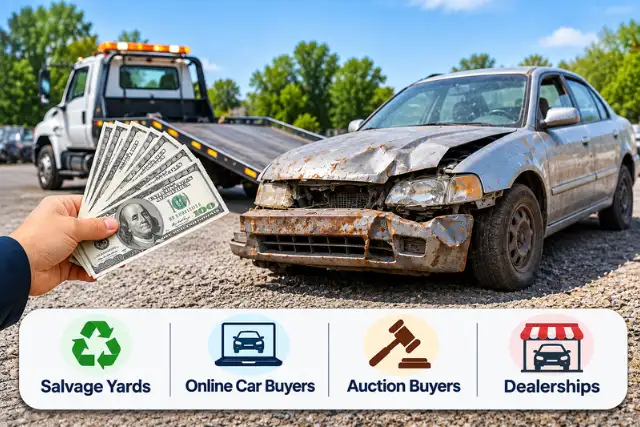
| Buyer Type | Usually Pays Best For | Typical Strength | Watch Out For |
| Local salvage yard | Older, heavy or complete cars | Often the highest cash for scrap value | Prices vary a lot between yards |
| Scrapyard (by weight) | Non-running, stripped cars | Quick pickup, fast cash | Weight-based offers can feel low |
| National online buyer | Newer or damaged cars | Easy online quote, free towing | Offer can drop after inspection |
| Auction buyer (like Copart) | Insurance totals, damaged late models | Wide buyer pool | Not every car qualifies |
| Dealer (like CarMax or Carvana) | Cars that still run | Simple, fast, same day | May offer less on very old cars |
| Parts buyer or private seller | Cars with in-demand parts | Can beat scrap price | Takes more time and effort |
Which one is the best junk car buyer for you depends on what your car actually is. A 2004 sedan with a dead engine and a 2016 SUV with accident damage live in two different markets.
How Much Cash Can You Really Get for a Junk Car?
Honest answer: it depends, and anyone who promises a fixed number without seeing your car is guessing.
As a rough estimate, many junk cars sell somewhere between $100 and $600, with heavier trucks and SUVs often landing higher. A newer car with real parts value or a running engine can fetch well over that. Treat these figures as ballpark numbers and not quotes. Local scrap prices change, and so do the offers.
If someone says they pay “up to $10,000” for any junk car, read that as marketing. The top of the range is for cars that are not really junk.
What Decides Your Offer
Buyers look at the same handful of things. Knowing them helps you spot a fair price.
- Weight. Heavier cars contain more scrap steel. That’s why a full-size truck often beats a small hatchback.
- Make, model and year. Popular models have parts people want, which raises the price.
- Condition and completeness. A car with all its parts is worth more than a stripped shell.
- The catalytic converter. It contains precious metals and can be a large part of your vehicle’s value. Before selling, learn how to tell if your catalytic converter is bad, especially if you are deciding whether to repair the vehicle or sell it for scrap. A missing converter can lower the buyer’s offer.
- Location. Distance to the yard and local demand change what a buyer can pay.
- Title and paperwork. A clean title makes the sale easier and can protect your price.
Why Scrap Metal Prices Matter
Scrapyards pay based on what steel and other metals fetch at the time. When the market dips, offers dip with it. If your car isn’t going anywhere, a quote from three weeks ago might be out of date. Ask for a fresh one and a quote that holds for at least a few days.
Step by Step: How to Get Money for Junk Cars
- Gather the basics. Note your car’s year, make, model, mileage and VIN, and confirm whether it runs. You can also check your vehicle’s VIN number history to review its background before contacting potential buyers.
- Find your title. Look at your state DMV rules if it’s missing. Some states allow sales of old vehicles without one, and others do not.
- Take clear photos. Front, back, sides, interior and any damage. Honest photos prevent last minute price cuts.
- Get three or more quotes. Mix local yards with at least one national buyer.
- Ask what the final cash amount is. Include towing, admin fees and any deductions.
- Confirm pickup details. Get a time window and ask who will sign what.
- Remove your stuff. Check the glovebox, trunk, under the seats and any toll tags.
- Get paid first. Collect payment, sign the title, and keep a bill of sale.
- Cancel insurance and file a release of liability if your state requires it.
Companies That Buy Junk Cars for Cash
Several well known names buy cars in poor shape. Availability, pricing and rules vary by state, so check each company’s current terms before you rely on it.
- Peddle: An online buyer that gives a quote and arranges pickup for many non-running and damaged cars.
- Copart: Known for auctions of damaged and salvage vehicles, and it also buys cars directly from owners in some cases.
- CarMax: Will give you an offer on most cars, which is handy if yours still runs.
- Carvana: Another online option that makes instant offers on many vehicles.
- Pick-n-Pull and similar yards: Self-service yards that buy cars for parts and scrap in many areas.
- Local scrapyards and salvage yards: Often the strongest source of cash for older vehicles, and the easiest to negotiate with.
None of these companies is automatically the highest-paying junk car buyer. If you’re comparing options to find out who gives the most cash for junk cars, request quotes from national buyers as well as local salvage yards. Comparing their final offers is the best way to identify the buyer willing to pay more for your vehicle.
Who Pays the Most for Junk Cars Near Me?
Local matters more than most people think. A yard five miles away spends less on towing and can pay more. To find who pays well in your area:
- Search “junk car buyers near me” and read recent reviews, not just star ratings.
- Call at least two local yards and ask for a weight-based quote and a parts-based quote.
- Ask whether the price includes towing.
- Check local forums and community groups for honest feedback.
If you live in a big metro, you’ll have many options. In a small town, one yard might be your best bet, so compare it against an online quote to keep it fair.
Paperwork You Need Before You Sell
Rules differ by state, but these items come up often.
- Title: Proof you own the car. Sign it exactly as your name appears.
- Bill of sale: A simple record of price, date, VIN and both parties.
- Release of liability: Tells the DMV you no longer own the car.
- License plates: Some states want them removed and returned.
- ID: Buyers usually ask to see it.
Skip any of these and you could stay legally responsible for a car you no longer have. Check with your state DMV for the exact steps. The US Department of Justice also provides information about the National Motor Vehicle Title Information System (NMVTIS), which tracks vehicle title, junk and salvage history.
Mistakes That Cost You Money
- Taking the first offer you get.
- Ignoring towing or admin fees that shrink the payout.
- Selling without a title when your state requires one.
- Stripping valuable parts without telling the buyer, then expecting the same price.
- Handing over the keys before you’re paid.
- Skipping photos and being surprised by a lower offer at pickup.
- Forgetting to cancel insurance or file the release of liability.
Red Flags and Scams to Avoid
Most buyers are honest, but a few aren’t. Be cautious if a buyer:
- Won’t give a written quote.
- Changes the price at pickup without a clear reason.
- Asks you to pay a fee to receive your money.
- Wants the title signed with the buyer section left blank.
- Has no business address, reviews or license where one is expected.
A reputable buyer is happy to put the numbers in writing and explain them.
Other Ways to Get More Than Scrap Value
If your car isn’t truly dead, consider these.
- Sell parts separately. If your vehicle has valuable components, you can learn how to sell a car for parts instead of accepting only its scrap value. Wheels, batteries, stereos and catalytic converters may bring additional money, but check your state’s rules on selling converters.
- Repair and resell. You can also explore where to sell car parts if removing and selling valuable components separately could bring in more money. Repair and resell the vehicle only if a cheap fix can make financial sense.
- Trade it in. A dealer may credit you something even for a rough car.
- Donate it. You get no cash, but you may get a tax deduction. Talk to a tax professional.
Key Takeaways
- Offers for the same car can differ by hundreds of dollars, so always compare quotes.
- Weight, make, model, condition and your location drive the price.
- Scrap metal prices move, so a quote today may not match one next month.
- Free towing is common, but check for hidden fees before you agree.
- Never hand over your car before you have the money and the paperwork is done.
Final Verdict: Who Gives the Most Cash for Junk Cars?
So, who gives the most cash for junk cars? For old, heavy or complete vehicles, a local salvage yard or scrapyard often comes out on top. For newer, damaged or running cars, national buyers and dealers can pay more. The real winner is the buyer who gives you the best written quote after fees, and you only find that by comparing. Take an hour, collect three offers, and don’t let go of the car until the money and paperwork are done.
Frequently Asked Questions (FAQs)
Who gives the most cash for junk cars?
It depends on your vehicle and location. Local salvage yards often offer the highest payouts for older, heavier vehicles, while national buyers and dealerships may pay more for newer or running cars. Get at least three quotes and compare the final amount after towing and other fees.
Who pays the most for junk cars near me?
Start with local yards, since shorter towing distances help them offer more. Then compare with one online buyer. Ask each for the final amount after fees.
How much money can I get for a junk car?
Many junk cars bring roughly $100 to $600, though heavier or newer vehicles can bring more. These are estimates and depend on scrap prices and condition.
Can I sell a junk car without a title?
Sometimes. Rules differ by state and by vehicle age. Check with your state DMV, and be careful with any buyer who asks you to skip the paperwork.
Does a junk car have to run to get cash?
No. Many buyers take non-running cars. A running car usually earns a better offer, and a dealer may be an option.
Is towing really free when I sell a junk car?
Often yes, but not always. Confirm that towing is free and that no fees are taken from your payout before you agree.
What is the best junk car buyer for newer damaged cars?
Auction buyers and national online buyers often do well with newer damaged vehicles. Get a quote from at least one of them alongside a local yard.
Why did my offer drop at pickup?
Usually because the car’s condition didn’t match the description, parts were missing or scrap prices changed. Accurate photos and honest details help prevent this.
When should I sell my junk car?
As soon as it’s no longer worth fixing. Waiting can cost you through storage, insurance, registration and possible parts theft.
Can I get cash the same day?
Many buyers offer same day or next day pickup and payment, depending on your area. Ask for the pickup time and payment method upfront.
Disclaimer:
This article is intended for informational purposes only. Junk car values, buyer offers, towing arrangements, and vehicle disposal requirements may vary depending on your location, vehicle condition, and current scrap metal prices. Any prices or estimates mentioned are for general guidance and are not guaranteed offers. Always verify a buyer’s terms, payment method, and applicable state title and transfer requirements before selling your vehicle. Mention of any company or service does not constitute an endorsement or guarantee of its services.