


Written by the AutoMagToday Content Team | Reviewed by Anand Raj, Automotive Review Expert, AutoMagToday | Last updated: October 2026
Quick Answer
In the U.S., open a car wash business by deciding which mode makes sense (mobile only, or mobile combined with permanent shop), forming a legal entity, registering for an Employer Identification Number (EIN), obtaining business licenses at the local level, obtaining business liability insurance, purchasing basic equipment, pricing your services, and doing local marketing with a Google Business Profile and word of mouth. Business can be established with a mobile approach for less than a few thousand dollars, but shop-based approaches need substantial capital investment.
If you’ve ever finished cleaning your own car and thought, people would actually pay for this, you’re onto something. Learning how to start a car cleaning business doesn’t require a garage full of expensive gear or a business degree – it needs a clear plan, a few hundred dollars of the right equipment, and the willingness to show up and do good work.
And the demand is real. More than 90% of U.S. households own at least one vehicle, and a huge share of those owners are too busy (or too uninterested) to keep them clean themselves. That’s a lot of dirty cars and not enough people offering a reliable clean. Owners also need to know how to get rid of water spots on a car, making exterior cleaning and maintenance useful topics to understand.” This guide walks you through the whole thing – from picking a model to landing your first hundred customers without the fluff.
Is a Car Cleaning Business Actually Worth Starting?
Short version: yes, for the right person. It’s one of the few businesses where sweat equity matters more than startup capital, and where you can test demand on weekends before quitting anything.
A few reasons it holds up well in 2026:
- Steady demand – Cars get dirty on a schedule. That creates repeat customers, not one-off sales.
- Low barrier to entry – You can start mobile from your own vehicle and skip rent entirely.
- Fairly recession-resistant – People delay big purchases in a downturn but often keep the car they have — and want it maintained.
- Room to grow – Start solo, add crews and vans later, or move into fleet and dealership contracts.
- It’s not passive income – It’s real, physical work. But the margins on detailing in particular can be strong once your equipment is paid off.
Car Wash vs. Car Detailing vs. Mobile Detailing
All three of these types get grouped together, but they are three completely different businesses with two completely different sets of costs and payoff profiles. Understanding which one of these you are building determines everything thereafter.
| Factor | Basic Car Wash | Car Detailing | Mobile Detailing |
| Startup cost | High (fixed site) | Medium | Low |
| Skill level | Low | High | Medium–High |
| Time per car | 15–30 min | 2–5 hrs | 1–4 hrs |
| Avg. ticket | $10–$30 | $150–$400+ | $120–$350+ |
| Overhead | High (rent, water) | Medium | Low (no rent) |
| Best for | High-traffic locations | Skilled, detail-focused owners | Beginners, side hustlers |
For most people asking how to start up a car cleaning business from scratch, mobile detailing is the smartest entry point — lowest cost, highest flexibility, and you bring the service to the customer’s driveway.
Step-by-Step: How to Start a Mobile Car Cleaning Business
Step 1 – Pick Your Business Model
Home-based, fully mobile, or a fixed shop. Mobile wins for beginners because there’s no lease and you can start this weekend. Decide now, because it changes your budget and licensing.
Step 2 – Research Your Local Market
Look at the detailers already working your area. Read their reviews. Note their prices, what customers praise, and what they complain about. Gaps you spot — no eco-friendly option, nobody serving office parks, weak availability — become your angle.
Step 3 – Register Your Business
Choose a structure. A sole proprietorship is fast and free-ish but offers no liability protection. An LLC costs a bit more and adds a layer between your business and your personal assets — worth it for most. Then apply for an Employer Identification Number (EIN) directly through the IRS, open a separate business bank account, and check whether your state requires you to collect sales tax on services.
Step 4 – Get Licenses and Permits
Requirements vary a lot by city and state, so confirm locally. Commonly you’ll look at a local business license, a home occupation permit if you run it from home, and — this one trips people up — water discharge or environmental rules if you’re washing on-site. Check with your city or county before your first job.
Step 5 – Buy the Right Insurance
Don’t skip this. At minimum, carry general liability. If you drive to clients, add commercial auto. If you’ll ever handle a customer’s keys or their car, look into garage keepers insurance. Add workers’ comp once you hire.
Step 6 – Buy Only the Equipment You Need
Resist the urge to overspend on day one. A workable mobile starter kit:
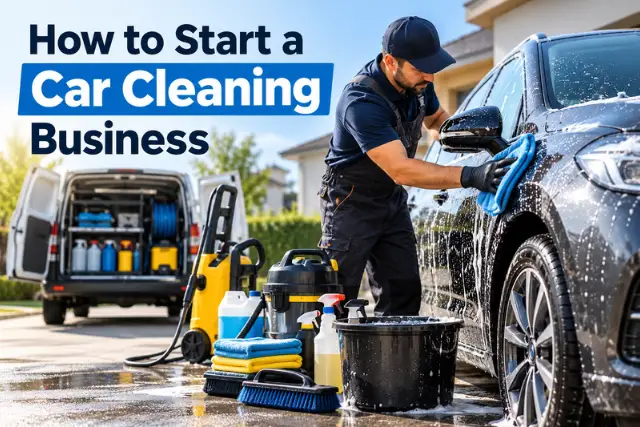
- Pressure washer + portable water tank
- Wet/dry vacuum or extractor
- Foam cannon, buckets, and grit guards
- Microfiber towels (buy more than you think)
- Dual-action polisher
- Safe, biodegradable soaps and interior cleaners
- Generator if you can’t rely on the customer’s power
Start lean and let profits fund upgrades. Choosing the right cleaning methods also matters, especially when offering services such as removing water spots from car paint. Eco-friendly, water-saving products aren’t just good PR — many municipalities increasingly expect them.
Step 7 – Set Your Pricing
Focus on value, not the least expensive wash in town. Racing to the bottom is the quickest way to burn out. Create tiered packages (Basic Wash Full Detail Ceramic Protection), sell add ons such as stain removal or headlight work, and develop membership plans to get predictable monthly income. These are ideal targets for fleet and dealership accounts.
Step 8 – Build a Simple Brand and Website
You don’t need a fancy site to start a one-page website with your services, pricing, a photo gallery, and a booking button beats nothing. A clean logo, a wrapped vehicle, and a uniform make a solo operation look established. If you plan to add vehicle graphics, learn whether vinyl car decals need to be laminated to help protect their finish.
Step 9 – Get Found and Land Your First 100 Customers
Secure your Google Business Profile first. Optimize it for as many search categories as you can. You can do this by claiming your free profile here, and then updating your profile with pictures and videos.
Share before and after pictures on Instagram, Facebook, TikTok and Shorts.
Collect reviews and referrals from your customers. Discount for first timers and thank your customers with a cash referral. Knock on doors in office parks and apartment complexes. Your office park guy washing cars in the parking lot is booked up for a reason.
How Much Does It Cost to Start a Car Cleaning Business?
Costs swing widely by model. Treat these as planning estimates, not guarantees — your local prices, permits, and choices will move them.
| Model | Typical Startup Range | Monthly Costs | Rent Needed? |
| Home-based / part-time | $500–$2,000 | Low (supplies, gas) | No |
| Full mobile detailing | $3,000–$12,000 | Medium (van, fuel, insurance) | No |
| Fixed-location shop | $50,000–$250,000+ | High (lease, utilities, staff) | Yes |
Most first-timers start home-based or mobile, prove the demand, then reinvest.
How Much Can You Actually Earn?
A talented mobile detailer who charges $150 to $300 a pop and does two-three jobs a day could have a decent weekly income-particularly once you’re done financing equipment. More so, your profit won’t stem from single washes.
They’ll come from residual business: a dealership arrangement, monthly subscription packages, and fleet contracts ensuring your schedule’s booked without requiring you to actively market every other second.
However, the specific amount varies by season, location, and your industriousness, so verify this through practice before expanding too broadly.
Common Mistakes That Sink New Car Cleaning Businesses
- Pricing is too low – Cheap attracts the worst customers and starves your margins.
- Over-buying gear early – Buy what today’s jobs need, not what looks cool.
- Ignoring reviews – Online reputation is your storefront.
- No repeat system – One-off jobs mean you’re always chasing new customers.
- Skimping on insurance – One damaged vehicle can wipe out months of profit, so business owners should understand the basics of car insurance coverage for hail damage and how coverage can differ by policy.
- Ignoring water-runoff rules – A single environmental fine hurts more than a slow week.
Mobile vs. Shop: Which Should You Choose?
If you’re deciding between the two, weigh it simply. Mobile means low investment, low overhead, high flexibility, and you go where the customers are — ideal for launching and testing. A shop offers higher volume and walk-in traffic but comes with rent, utilities, and far more risk before you break even. Most successful owners start mobile and open a location later, once demand is proven and cash flow is stable.
Key Takeaways
- Choose your model, this is the lowest-risk way to learn how to start a car cleaning business and test real demand.
- Register properly, get insured, and confirm local licensing before your first paid job.
Buy lean, price on value, and never race competitors to the bottom. - Build recurring revenue through memberships, fleet, and dealership accounts — not just one-off washes.
- Use Google Business Profile, reviews, and referrals as your main customer engine, then scale with staff and vans.
Final Thoughts
Starting a car cleaning business isn’t about being perfect on day one. It’s about starting lean, doing genuinely good work, and letting happy customers build your reputation for you. Pick the model that fits your budget, get the legal basics right, and get that first car in front of a hose. The shine sells itself from there
Frequently Asked Questions
How much does it cost to start a car cleaning business in the U.S.?
A part-time home-based setup can start around $500–$2,000, a full mobile operation runs roughly $3,000–$12,000, and a fixed shop typically needs $50,000 or more. Mobile is the most budget-friendly entry point.
Is a mobile car cleaning business profitable?
It can be. With low overhead, no rent, and detailing tickets of $150+, a mobile detailer who builds repeat clients and memberships can earn a solid income once equipment costs are recovered.
Do I need a business license?
Usually yes – most cities require a local business license, and you may need environmental or home-occupation permits. Requirements vary by location, so confirm with your city or county office.
Can you start a car cleaning business without a car?
For a fully mobile model, reliable transport for your gear helps a lot. But you can absolutely start a fixed or home-based service where customers come to you, or begin on foot in a dense apartment complex or office park until you can afford a work vehicle.
How do I start a car detailing business as a kid or teen?
Start small and local – clean neighbors’ and family cars with basic supplies, do great work, and grow through word of mouth. Minors should register or handle licensing and taxes with a parent or guardian, since business and insurance rules apply to any paid service.
How do I start a car dealership cleaning business?
Dealerships need vehicles cleaned in volume for their lots and showrooms. Approach local dealers directly, offer per-vehicle or contract pricing, and lead with reliability and turnaround speed — that’s what dealers actually buy.
Can I offer just a car seat or interior cleaning?
Yes. A focused car seat and interior cleaning business (upholstery shampooing, stain and odor removal, pet hair) is a lower-equipment niche with strong demand from parents and pet owners. It’s a great way to specialize early.
How long until it’s profitable?
Many lean mobile operations reach profitability within a few months once equipment is paid off and repeat clients build up. Fixed-location shops take considerably longer due to rent and higher fixed costs.
Is a waterless or eco-friendly car wash legal?
In most areas, yes and waterless products can actually help you comply with local water-runoff regulations. Always confirm the rules in your municipality.
Disclaimer
This article is for informational purposes only and provides general guidance on starting a car cleaning business in the United States, including startup costs, business registration, licenses, insurance, equipment, pricing, and marketing. Actual costs, legal requirements, permits, and insurance needs vary by state, city, and business model. Verify all applicable requirements with the relevant local authorities and qualified professionals before starting or expanding your business. Income and profitability estimates are not guaranteed and depend on factors such as location, demand, pricing, and operating expenses.