


Checking how to check tyre air pressure is a fundamental part of maintaining your vehicle; however, for many motorists, it is an aspect of car maintenance that is overlooked.Most drivers have an assumption that the tyres they are using are OK unless they are visibly flat. An incorrect assumption regarding the inaccuracy of lubricant issued out based on manufacturer quality will lead to difficulty controlling the vehicle once on the road and increased fuel consumption when the vehicle is being operated.
By operating a vehicle with a manufacturer’s recommended tyre pressure, it makes a more stable vehicle when braking occurs, allows for proper stopping of the vehicle when using brakes, and allows the engine to use less power to operate the vehicle. This is why checking your Tyres Air Pressure should be included in each Driver’s daily routine, and not be left until the next Scheduled Service.
The best part about performing a Tyre Pressure check is how Time Efficient and Easy it is to do. You will not require any special tools or knowledge of the technical aspects, just a pressure gauge and a few minutes of your time. You might be interested in knowing what does TMPS mean on a car? We have made an informative article on this topic as well.
How to Check Tyre Air Pressure the Safe Way
The safety and performance of your vehicle heavily depend on the condition of your tyres. When tyres are under-inflated, this will not only cause premature wear, but also decrease the vehicle’s overall fuel economy. Conversely, an over-inflated tyre will result in reduced traction and will create a less comfortable ride.
Having the incorrect air pressure within your tyres may also change the way in which you steer the car and increase the distance that it takes to stop. Having either too much or too little air pressure in your tyres over time creates a chance for them to be damaged or to fail quickly. Knowledge of how to check tyre air pressure will assist you in avoiding some of these difficulties.
Additionally, maintaining a proper air pressure in your tyres will allow you to save money through the increase in the longevity of the tyre and the increase in the distance per gallon of gas you will receive from your vehicle.
How to Check Tyre Air Pressure Before Driving
It will be easy for anyone who does an internet search for how to check tyre air pressure? Instead, it will be as simple as going through the steps below at home or at any fuel station.
You will need
- A tyre pressure gauge (digital or manual)
- Air Compressor (Optional).
- Your car’s recommended tyre pressure details
Simple Steps to Follow
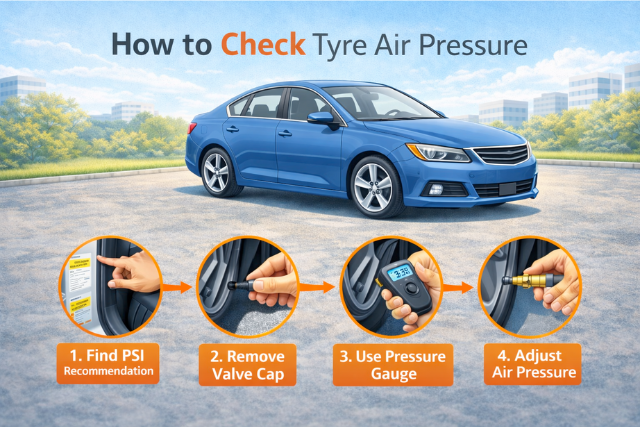
- Park the car on a level surface and turn off the engine.
- Make sure the tyres are cold for an accurate reading.
- Take the cap off the valve of one tyre.
- Press the pressure gauge firmly onto the valve.
- Note the PSI reading shown on the gauge.
- Compare it with the recommended pressure.
- Add or release air if required.
- Replace the valve cap tightly.
- Repeat these steps for all tyres, including the spare.
You can also learn about can you drive a car with check engine light on? We have made an informative article on this topic as well.
How to Check Air Pressure in Car Tyres
Many drivers seek out methods for how to check air pressure in car tyres without being erroneous. Consistency & Timing are the principal means to achieve this outcome.
First & foremost, when measuring tyre pressure, ensure all tyres are cooled (tyres have cooled off); the ideal time for checking tyre pressure is shortly before any driving occurs (ie prior to driving). If the tyres are measured after being driven, the measurement may have increased due to heat (from the tyre) & consequently, produces an inaccurate measurement.
You can find the recommended tyre pressure:
- Inside the driver-side door frame
- In the owner’s manual
- Near the fuel cap (on some cars)
Never rely solely on the pressure number printed on the tyre itself.
Recommended Tyre Pressure Guide
| Vehicle Type | Front Tyres (PSI) | Rear Tyres (PSI) |
| Hatchback | 30–32 PSI | 30–32 PSI |
| Sedan | 32–35 PSI | 32–35 PSI |
| SUV | 35–38 PSI | 35–40 PSI |
| Pickup | 38–45 PSI | 40–50 PSI |
Always follow manufacturer specifications for best performance.
Best Time to Check Tyre Pressure
Experts recommend checking tyre pressure:
- Once every month
- Before long trips
- When carrying heavy loads
- During major weather changes
Cold temperatures reduce air pressure, while hot conditions increase it. Regular checks help keep pressure balanced throughout the year.
Common Tyre Pressure Mistakes
Many drivers unknowingly make these mistakes:
- Checking pressure after driving
- Overinflating tyres for “better mileage”
- Ignoring small pressure differences
- Forgetting the spare tyre
Avoiding these errors makes your tyre checks more accurate and effective.
Benefits of Maintaining Correct Tyre Pressure
Keeping tyres at the right pressure offers clear advantages:
- Better fuel efficiency
- Improved handling and control
- Longer tyre lifespan
- Safer braking performance
- Reduced risk of tyre blowouts
These benefits make regular pressure checks well worth the effort.
Conclusion
Tyre air pressure is an important habit to develop.There are huge benefits of developing this habit including safer driving, lower fuel bills and extended tyre life span.
Once you know how to check tyre air pressure on your vehicle, it is easy and automatic to perform this simple safety check, which will help you have a smoother and safer ride every time you get behind the wheel of your vehicle.
Frequently Asked Questions (FAQs)
1. How often should I check tyre air pressure?
It’s best to check tyre pressure once a month and before any long journey.
2. What is the ideal time to check tyre pressure?
Early morning or when the tyres are cold gives the most accurate reading.
3. Can fuel stations be used to check tyre pressure?
Yes, most fuel stations have air pumps with pressure gauges available.
4. What happens if tyre pressure is too low?
Low pressure causes poor fuel economy, faster tyre wear, and reduced control.
5. Is high tyre pressure harmful?
Yes, overinflated tyres reduce road grip and can increase the risk of damage.

