


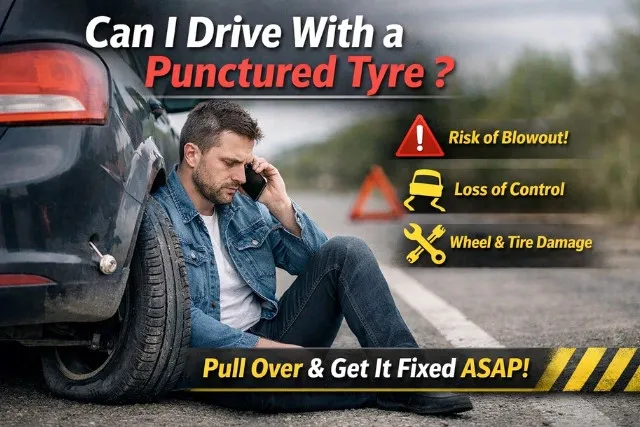
Many drivers ask the same urgent question during emergencies: can i drive with a punctured tyre? This situation usually happens unexpectedly—on a highway, during bad weather, or when help is far away. Knowing what to do can protect your safety and save your car from serious damage.
The short answer is no, it is not safe, but the full explanation matters. In this guide, we’ll clearly explain can I drive with a punctured tyre, what risks are involved, how far you might go in emergencies, and what really happens if you keep driving.
Driving with a punctured tyre may seem harmless for a short distance, but it can lead to expensive repairs or dangerous accidents. Understanding the facts will help you make the right decision when you’re stuck on the road. You can also read the relevant guide on how long can a dealership hold your car for repair.
Can I Drive With a Punctured Tyre in an Emergency Situation?
The simple and honest answer to can i drive with a punctured tyre is only in very rare emergency situations—and even then, for a very short distance.
A punctured tyre loses air pressure. Without proper pressure, the tyre cannot support your vehicle’s weight. This affects steering, braking, balance, and overall safety. Most experts strongly advise stopping immediately when you notice a puncture.
Why Driving on a Punctured Tyre Is Dangerous
Driving with a flat or punctured tyre puts extra stress on the tyre walls and wheel rim. This can cause permanent damage within minutes.
Even if the tyre looks “mostly fine,” internal damage may already be happening.
Can You Drive With a Punctured Tyre in an Emergency?
Many people wonder, can you drive with a punctured tyre just to reach a nearby repair shop?
In emergencies, driving slowly for a very short distance may be unavoidable. However:
- Speed should stay under 20–30 km/h
- Distance should be less than 1–2 km
- Only on smooth roads
This should be your last option, not a normal solution.
What Happens If You Drive With a Punctured Tyre
Understanding what happens if you drive with a punctured tyre helps explain why it’s risky.
Immediate Effects
- Loss of steering control
- Poor braking performance
- Vehicle pulling to one side
Long-Term Damage
| Damage Area | What Can Go Wrong |
| Tyre | Sidewall collapse, permanent damage |
| Rim | Bent or cracked alloy |
| Suspension | Misalignment issues |
| Brakes | Uneven braking |
The longer you drive, the worse the damage becomes.
Can You Drive a Car With Punctured Tyre Safely?
The honest answer is no. While people still ask can you drive a car with punctured tyre, modern vehicles are not designed for this.
Even short drives can:
- Destroy the tyre completely
- Damage expensive alloy wheels
- Increase accident risk
Your safety and repair costs are both at risk.
How Far Can You Drive With a Punctured Tyre?
One of the most common questions is how far can you drive with a punctured tyre.
General Rule
| Tyre Condition | Safe Distance |
| Fully flat tyre | 0 km (do not drive) |
| Slowly leaking tyre | 1–2 km max |
| Run-flat tyre | 50–80 km (as per manufacturer) |
If your tyre is completely flat, do not drive at all.
Types of Tyres and Puncture Driving
Normal Tyres
Normal tyres must never be driven when punctured.
Tubeless Tyres
Tubeless tyres may lose air slowly, but damage still occurs if driven on. Read a guide on how to check tyre air pressure instantly.
Run-Flat Tyres
Run-flat tyres are designed for emergencies, but even they have limits.
Warning Signs You Should Stop Immediately
- Loud flapping or thumping noise
- Steering feels heavy
- Car pulls strongly to one side
- Burning rubber smell
If you notice any of these, stop immediately.
What You Should Do Instead of Driving
Instead of risking damage, consider safer options:
- Pull over safely
- Turn on hazard lights
- Use a spare tyre
- Call roadside assistance
- Use a tyre inflator or sealant
These options are always safer than driving on a puncture.
Cost Comparison: Driving vs Repairing
| Action | Average Cost |
| Simple puncture repair | Low |
| New tyre | Medium |
| Rim replacement | High |
| Suspension damage | Very High |
Driving even a short distance can turn a cheap repair into an expensive problem.
Legal and Insurance Concerns
Driving with a known punctured tyre can:
- Violate road safety laws
- Void insurance claims after accidents
- Increase liability if an accident occurs
Safety laws expect drivers to maintain road-worthy vehicles.
Common Myths About Driving With a Punctured Tyre
| Myth | Reality |
| “I’ll drive slowly, so it’s fine” | Damage still occurs |
| “It’s just a small puncture” | Small leaks become big failures |
| “Modern cars can handle it” | Physics still applies |
Final Thoughts
So, can I drive with a punctured tyre? The safest answer is no. While emergencies happen, driving on a punctured tyre should only be a last resort and for the shortest possible distance.
Understanding can you drive with a punctured tyre, what happens if you drive with a punctured tyre, can you drive a car with punctured tyre, and how far can you drive with a punctured tyre helps you make safer decisions on the road.
Your safety, your car, and your wallet will all thank you for stopping and fixing the problem properly.
Frequently Asked Questions (FAQs)
1. Can I drive with a punctured tyre if it still has air?
You may drive very slowly for a very short distance, but it’s still risky.
2. Can you drive with a punctured tyre on the highway?
No. High speeds increase the risk of tyre blowouts and accidents.
3. What happens if you drive with a punctured tyre for long?
You can destroy the tyre, damage the rim, and risk losing control of the car.
4. How far can you drive with a punctured tyre in an emergency?
Usually less than 2 km, only to reach a safe stopping point.
5. Can you drive a car with punctured tyre if it’s a run-flat?
Yes, but only within manufacturer limits and at reduced speed.

