


Knowing how to read a tyre pressure gauge is an essential skill for every vehicle owner. Correct tyre pressure keeps your car safe, improves fuel efficiency, and helps tyres last longer. Many people ignore tyre pressure simply because they do not know how to read the gauge properly. You should also understand how to check tyre air pressure correctly to maintain proper tyre health.
Once you understand how to read a tyre pressure gauge, checking your tyres’ air pressure becomes quick and stress-free. Whether you use a digital tyre air pressure gauge or a traditional air tyre pressure gauge, the process is easier than you think.
Why Tyre Pressure Is Important
Tyres support the full weight of your vehicle. If the pressure is too low or too high, it can cause serious problems.
Correct tyre pressure helps with:
- Better fuel mileage
- Smooth steering
- Even tyre wear
- Safer braking
Low pressure can cause blowouts, while high pressure reduces grip on the road. Modern vehicles also use systems like TPMS, so it’s helpful to understand how the tyre pressure monitoring system works.
Types of Tyre Pressure Gauges
Before learning how to read a tyre pressure gauge, you must know the types available.
Air Tyre Pressure Gauge (Analogue Gauge)
An air tyre pressure gauge is the most traditional type.
It usually has:
- A round dial
- A needle that moves
- PSI numbers printed
These gauges do not need batteries and are very reliable.
Digital Tyre Air Pressure Gauge
A digital tyre air pressure gauge shows readings on a screen.
Features include:
- Easy-to-read numbers
- Accurate readings
- Battery operation
This type is popular because it is simple and beginner-friendly.
Electronic Tyre Pressure Gauge
An electronic tyre pressure gauge works similarly to digital models but often comes with extra features.
Some models include:
- Backlit screens
- Auto shut-off
- Multiple unit options
These gauges are often considered the best tyre air pressure gauge for modern vehicles.
How to Read a Tyre Pressure Gauge Correctly
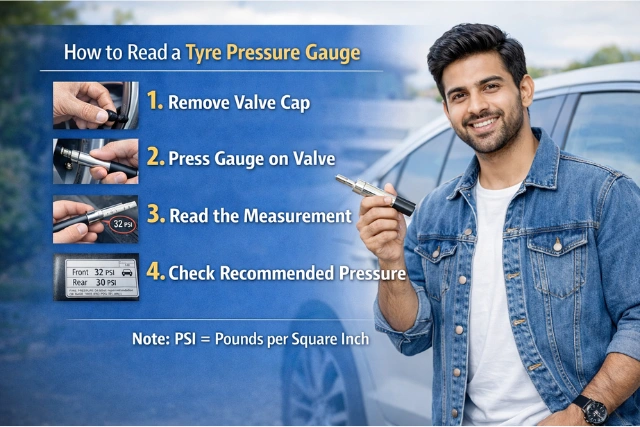
Learning how to read a tyre pressure gauge involves a few easy steps. Follow this process carefully for accurate results.
Step 1: Find Recommended Tyre Pressure
Check:
- Car door sticker
- Owner’s manual
Pressure is usually measured in PSI (pounds per square inch).
Step 2: Remove the Valve Cap
Unscrew the cap from the tyre valve. Keep it safe so you do not lose it.
Step 3: Attach the Gauge
Press the gauge firmly onto the valve stem. You should not hear air leaking.
Step 4: Read the Measurement
This step depends on the gauge type.
How to Read Tyre Pressure Gauge (Analogue)
- Look at where the needle stops
- Match it with the PSI numbers
- The needle position is your tyre pressure
How to Read a Digital Tyre Air Pressure Gauge
- Read the number displayed on the screen
- The reading appears instantly
- Some gauges beep when ready
Digital gauges remove guesswork.
How to Read an Electronic Tyre Pressure Gauge
- Turn on the device
- Attach to the valve
- Read PSI on the digital display
These gauges are often the most accurate.
Comparing Tyre Pressure Gauge Types
| Gauge Type | Ease of Use | Accuracy | Battery Needed |
| Air Tyre Pressure Gauge | Medium | Good | No |
| Digital Tyre Air Pressure Gauge | Easy | Very Good | Yes |
| Electronic Tyre Pressure Gauge | Very Easy | Excellent | Yes |
When Should You Check Tyre Pressure?
Always check tyres:
- When tyres are cold
- Early morning
- Before long trips
Heat increases pressure, giving false readings.
Common Mistakes When Reading Tyre Pressure
Avoid these common errors:
- Checking after driving
- Loose gauge attachment
- Ignoring recommended PSI
- Forgetting valve caps
Correct technique ensures accurate results.
What Happens If Tyre Pressure Is Incorrect?
Driving with incorrect tyre pressure can increase the risk of tyre damage, so it’s important to know: can I drive with a punctured tyre in emergencies.
Low pressure can cause:
- Poor handling
- Faster tyre wear
- Higher fuel use
High pressure can cause:
- Reduced road grip
- Rough ride
- Increased blowout risk
Understanding how to read a tyre pressure gauge helps avoid these problems.
How Often Should You Check Tyre Pressure?
Experts recommend:
- Once a month
- Before long journeys
- During temperature changes
Regular checks improve safety and tyre life. In case of emergencies, you should also know how long you can drive with a spare tyre safely.
Best Tyre Air Pressure Gauge – What to Look For
Choosing the best tyre air pressure gauge depends on your needs.
Look for:
- Clear display
- Accurate readings
- Durable build
- Easy handling
Digital and electronic models are best for beginners. Choosing quality tyres also matters—learn more about where Michelin tyres are made and how global manufacturing ensures consistency.
Ideal Tyre Pressure Ranges
| Vehicle Type | Average PSI |
| Small Cars | 30–35 PSI |
| Sedans | 32–36 PSI |
| SUVs | 35–40 PSI |
| Trucks | 40–50 PSI |
Tyre manufacturers like Michelin also recommend maintaining proper PSI levels to ensure optimal performance and tyre lifespan. Always follow manufacturer recommendations.
Conclusion
Learning how to read a tyre pressure gauge is a simple but powerful skill. It helps keep your vehicle safe, improves performance, and saves money on fuel and tyres. Whether you use a digital tyre air pressure gauge, electronic tyre pressure gauge, or a traditional air tyre pressure gauge, the key is regular checking and correct readings.
With this guide, you now know exactly how to read tyre pressure gauge results confidently and correctly.
Frequently Asked Questions (FAQs)
1. How to read a tyre pressure gauge properly?
Attach the gauge firmly to the valve and read the PSI shown on the dial or screen.
2. How to read tyre pressure gauge numbers?
The numbers represent PSI. Match the needle or display reading to the correct PSI.
3. Is a digital tyre air pressure gauge better than an analogue?
Yes, digital gauges are easier to read and usually more accurate.
4. What is the best tyre air pressure gauge for beginners?
A digital or electronic tyre pressure gauge is best for beginners.
5. Can I use an air tyre pressure gauge at home?
Yes, air tyre pressure gauges work perfectly at home and need no batteries.
Reviewed by Automotive Research Team
This article was reviewed for accuracy using tyre pressure resources, vehicle maintenance guidance, and publicly available automotive information available at the time of publication.